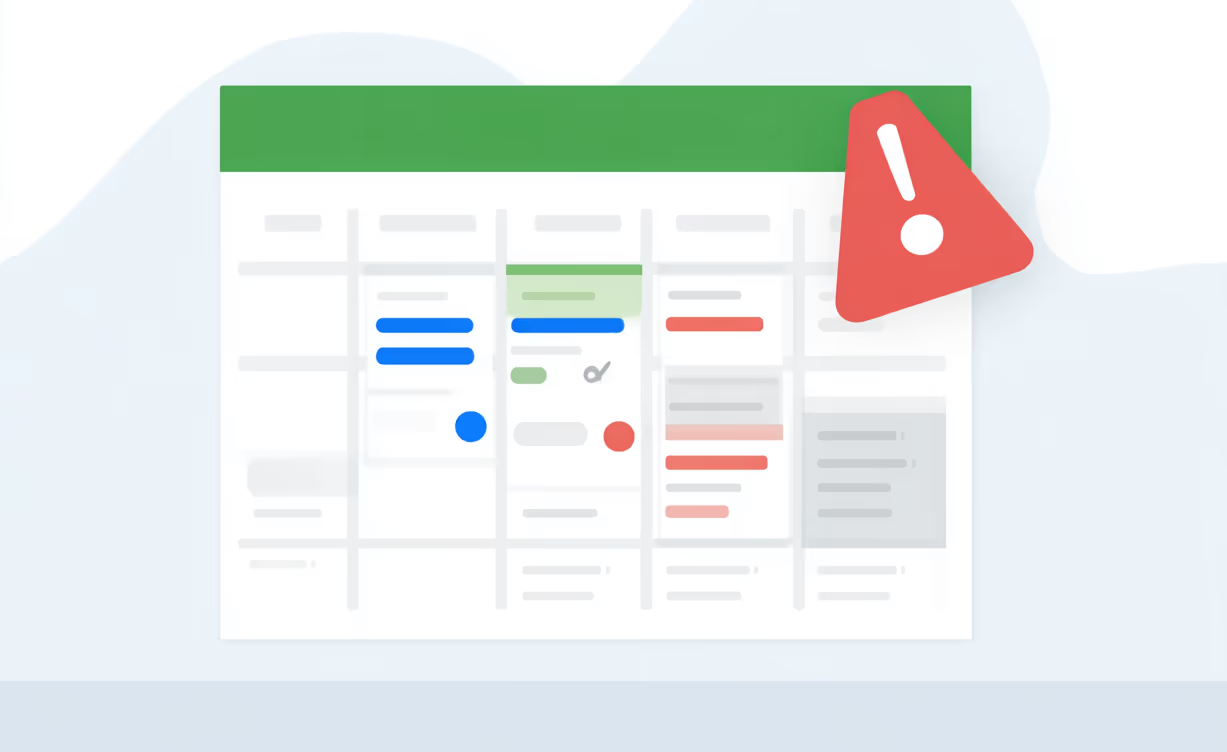
SaaS auto-renewals are one of the most common — and expensive — ways companies lose money without realising it.
You check your bank statement and see a $2,400 charge from a tool you barely remember approving. The free trial ended months ago. Or worse, you meant to cancel, but the cancellation window quietly passed.
No approval. No alert. Just money gone.
This guide breaks down why SaaS auto-renewals catch teams off guard, the hidden risks they create, and a simple system you can use to prevent surprise charges and take back control.
SaaS auto-renewals are contract clauses that automatically extend a subscription unless cancellation notice is given within a specified period — often 30 to 90 days before renewal.
Why SaaS Auto-Renewals Are So Easy to Miss
SaaS vendors rely on auto-renewals because they work. From a business perspective, recurring revenue is predictable and efficient.
The real issue isn't auto-renewal itself — it's the combination of:
- Automatic contract renewals
- Strict cancellation notice periods
- Lack of clear ownership — see how to notify your team about contract renewals for a practical approach
Most enterprise SaaS contracts require 30–90 days' notice to cancel. Miss that window by even one day, and you're often locked into another full year.
The Typical SaaS Auto-Renewal Trap (And Why Teams Miss It)
This pattern is extremely common:
- A tool is purchased early in the year
- It works well and fades into the background
- Renewal approaches during a busy period
- No one explicitly reviews the contract
- The cancellation window passes unnoticed
- The contract renews automatically
This isn't negligence. It's what happens when renewals rely on memory instead of ownership.
According to Zylo's 2024 SaaS Management Index, 53% of SaaS licenses go completely unused — often because tools quietly renew long after teams stop actively using them.
This pattern shows up repeatedly in SaaS-heavy teams, especially where renewal ownership isn't clearly defined.
That's not inefficiency. That's silent budget leakage.
How to Avoid Surprise SaaS Auto-Renewals
Preventing surprise renewals doesn't require complex procurement systems. It requires consistency and visibility.
In short, avoiding surprise SaaS auto-renewals comes down to:
- Centralising contract data
- Setting escalating reminders
- Reviewing usage before renewal
- Treating renewals as negotiation points
- Assigning clear ownership
Here's a proven five-step system.
1. Create a Single Source of Truth for SaaS Contracts
You can't manage renewals you've forgotten about.
Every SaaS subscription should be tracked in one place — not scattered across inboxes, spreadsheets, and calendars.
At minimum, track:
- Vendor name
- Renewal date
- Annual cost
- Cancellation notice period
- Contract owner
- Usage status
Spreadsheets and calendars technically work, but they rely on manual upkeep. That's why renewals get missed in the first place. For an honest look at where spreadsheets break down specifically, see Managing SaaS Renewals in a Spreadsheet vs. Termedora. If your team uses Notion for contract tracking or Zapier for reminders, see Notion vs Termedora and Zapier vs Termedora for what those setups can and can't do.
2. Set Escalating Renewal Reminders
One reminder is not enough.
Renewals need escalation, not a single notification that can be ignored or buried.
A practical reminder schedule:
- 90 days before renewal – Awareness
- 60 days before renewal – Decision point
- 30 days before renewal – Action required
This creates buffer. Even if one reminder is missed, the system still holds.
This is why many teams move from spreadsheets and calendars to dedicated renewal tracking systems that centralise ownership and escalation. Our contract reminder software comparison covers which tools actually support escalating schedules rather than a single fixed alert.
3. Review Usage Before Every Renewal
A renewal notification should always trigger a review.
Ask:
- Is the tool still actively used?
- How many users rely on it?
- Has usage decreased?
- Are there cheaper or consolidated alternatives?
Many SaaS tools expose usage data in their admin dashboards. Use it. Even modest right-sizing can reduce renewal costs significantly.
4. Treat Renewals as Negotiation Opportunities
Renewal time is leverage time. For a full playbook on how to approach these conversations — including what to ask for and when — see our guide on how to negotiate SaaS renewals.
You're in a strong position if:
- You've been a customer for multiple years
- Your usage has declined
- You're considering alternatives
- You're willing to commit to a longer term
Vendors often have flexibility during renewals — especially near quarter or year-end.
Even a 10–20% reduction during negotiation often saves more than an entire year of renewal tracking software.
5. Document Contracts and Renewal Decisions
Keep records of:
- Original contract terms
- Amendments and changes
- Negotiation outcomes
- Cancellation confirmations
This protects you during disputes and prevents the same renewal mistakes from repeating next year.
Common SaaS Auto-Renewal Red Flags
In New Contracts
- Automatic annual price increases
- Cancellation windows longer than 30 days
- Auto-conversion from monthly to annual billing
- Renewal terms buried in fine print
During Renewals
- Pressure tactics ("we need confirmation by Friday")
- Unexplained price increases
- Changes to terms without clear disclosure
- Resistance to sharing usage data
Build a Simple SaaS Renewal Review Habit
The best system is one teams actually use.
Monthly (15 minutes):- Review renewals in the next 90 days
- Flag tools needing review
- Audit all SaaS subscriptions
- Review total SaaS spend
- Identify consolidation opportunities
- Update missing contract details
This cadence alone prevents most surprise renewals.
What to Do If a SaaS Auto-Renewal Already Happened
If you've already been charged:
- Contact the vendor immediately
- Ask for a prorated refund or credit
- Review contract terms carefully
- Dispute via your payment provider if necessary
- Add the contract to your tracking system
Many vendors are more flexible than people expect — especially with prompt communication.
Who This Matters Most For
This problem is especially costly for:
- SaaS-heavy teams with 20+ subscriptions
- Finance and operations leaders responsible for software spend
- Agencies managing recurring vendor relationships
- Companies without formal procurement processes
Take Control of SaaS Renewals
SaaS auto-renewals aren't going away. They're standard practice.
But surprise renewals are avoidable.
With a simple system — centralised tracking, scheduled multi-stage reminders, usage reviews, and clear ownership — renewals become intentional decisions, not expensive accidents.
If you're not yet on a dedicated tool, our free SaaS renewal tracking spreadsheet template is a solid starting point — it handles the visibility problem and shows you exactly what a well-structured manual system looks like before you decide to automate.
And once a renewal alert fires, you'll need to act on it — our contract renewal email templates cover every scenario from vendor outreach to cancellation notices, ready to copy and paste.
*Want to automate SaaS renewal tracking and scheduled reminders?
Try Termedora free and never lose money to silent renewals again.*Related articles
SaaS Spend Audit: How to Find Hidden Subscriptions (Step-by-Step)
Most companies are paying for SaaS tools nobody uses. Here's a practical step-by-step audit to find hidden subscriptions, cut wasted spend, and take back control of your software budget.
How to Negotiate SaaS Renewals (And Actually Get a Better Deal)
Most SaaS vendors expect negotiation at renewal time — but most buyers don't ask. Here's a practical guide to negotiating better pricing, terms, and flexibility on your SaaS contracts.

8 Best SaaS Spend Management Software Tools in 2026 (With Pricing)
SaaS spend management software compared for 2026 — from free renewal trackers to enterprise procurement platforms. Real pricing, honest trade-offs, and who each tool is actually built for.